NAFDAC Links Chinese-Run Networks to Nigeria’s Counterfeit Goods Surge, Says N1.5trn in Fake Products Destroyed
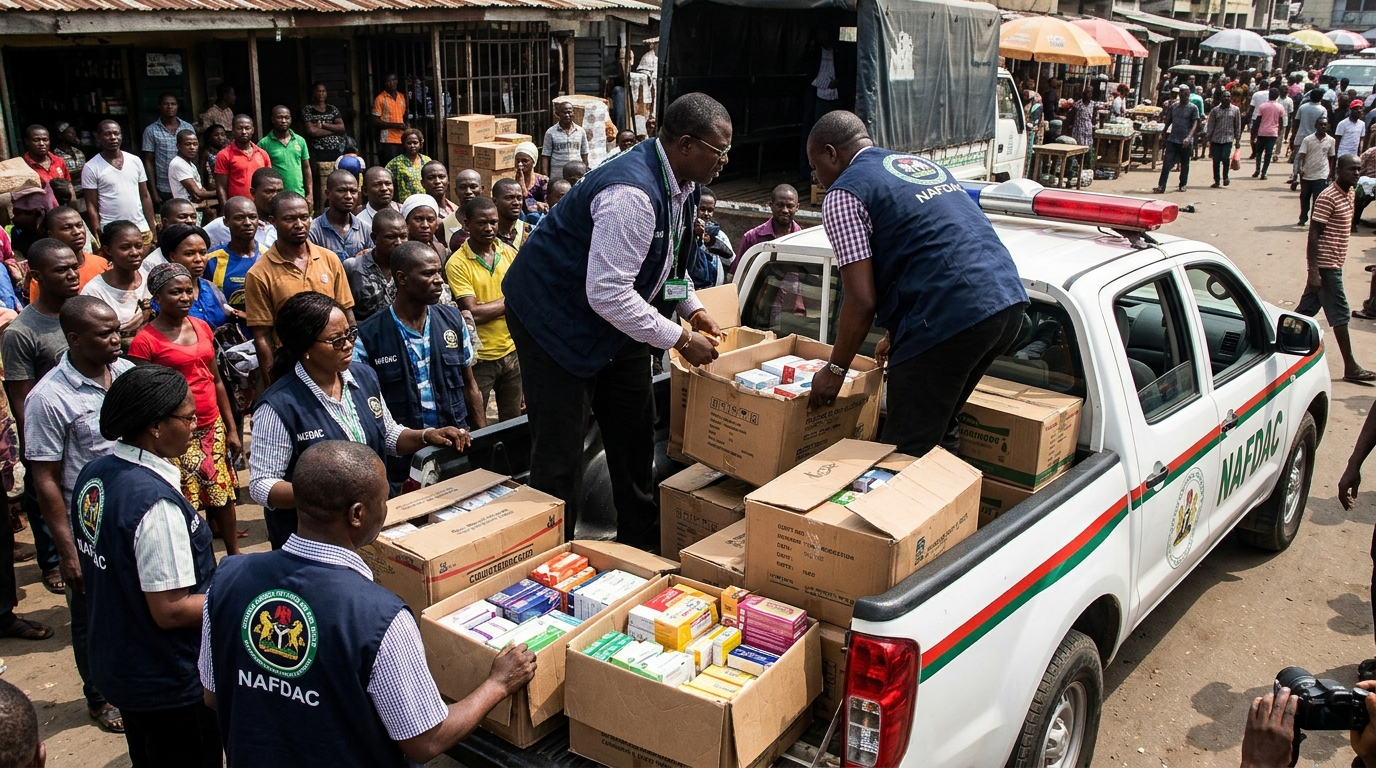
The drug and food regulator says criminal networks tied to Chinese nationals are now producing and distributing fake goods from within Nigeria, as the agency reports destroying N1.5 trillion worth of counterfeit products and securing a record 64 convictions in a year.
Nigeria’s drug and food regulator, the National Agency for Food and Drug Administration and Control (NAFDAC), says criminal networks linked to Chinese nationals resident in the country are now manufacturing and distributing counterfeit goods domestically, cutting out the need to import fakes from abroad.
Martins Iluyomade, NAFDAC’s Director of Investigation and Enforcement, said the counterfeiting model has shifted in recent years. “Before, to fake a product, you needed to go to China to bring it. Now, you don’t need to go. They are here with us,” he said, adding that some Chinese nationals in Nigeria own logistics companies that the agency believes have been used to distribute fake goods, some of which it has since shut down.
Products affected include toothpaste sold under established brand names, skincare creams, bottled water, yoghurt drinks and regulated pharmaceutical products, according to the agency.
NAFDAC officials were careful to frame the crackdown around criminal actors rather than Chinese residents broadly, describing the target as counterfeit networks and the manufacturing plants and logistics channels they operate, rather than the wider Chinese community in Nigeria.
The disclosure came as NAFDAC’s Director-General, Prof Mojisola Adeyeye, held a briefing on September 7 to respond to mounting public frustration over fake products in the Nigerian market. She said the agency had destroyed counterfeit and substandard goods worth N1.5 trillion and secured 64 convictions between June 2025 and June 2026, which she described as the highest number of convictions in the agency’s history. NAFDAC said it currently has 47,830 facilities under surveillance nationwide and removed 7,210 fake or substandard products from circulation in a sweep between May and July 2026.
The agency said sentences handed down in the period ranged from one to seven years without the option of a fine, including seven-year terms in cases involving fake antibiotics and pharmaceutical counterfeiting, and five-year terms linked to counterfeit malaria drugs and codeine-based cough syrup. It said fake alcoholic drinks accounted for more than half of its recent court victories, while three companies were caught illegally refilling branded 19-litre water bottles with water from unapproved sources and supplying them to hotels and supermarkets.
“The fight against fake and substandard products is a continuous one. As long as there are people willing to compromise public health for profit, regulatory agencies must remain vigilant,” Adeyeye said.
Despite the figures, the briefing did not fully quiet public criticism. Manufacturers, medical experts, economists and social media commentators, including some health influencers, have renewed calls for more visible enforcement rather than periodic statements. On social media, some Nigerians pressed NAFDAC to act rather than talk, with one widely shared comment urging the agency to “show serious workings and total force against these evil people,” while others raised concerns about pharmacies and supermarkets still selling suspect products and asked how ordinary shoppers could tell genuine goods from fakes.
NAFDAC has since launched a consumer-education push encouraging Nigerians to read product labels carefully before buying packaged food and other regulated goods, alongside its enforcement operations.
Keep reading

Oyo Police Arrest One, Hunt Two Others Over Machete Attack in Eruwa Land Dispute

Five Arrested After Grenade Attack on Army Camp in Oyo, Deputy Governor Deploys 120 Soldiers
Oyo Police Arrest Suspected Drug Dealer in Apata, Ibadan
Oyo Police, PCRC Launch Safe School Drive as New Academic Session Opens